








Water-Activated Flood Barriers vs. Sandbags: Which Works Better for Your Home?
Table of Contents
- How Traditional Sandbags Work
- What Is a Water-Activated Flood Barrier?
- Sandbags vs. Water-Activated Bags: Comparison Table
- When Sand-Filled Barriers Still Make Sense
- How to Use Flood Bags at Doors, Garages, and Driveways
- Coastal and Salt Water Flooding: Activate Bags With Fresh Water First
- After the Flood: Removing Standing Water
- Choosing Between Sandbags and Water-Activated Barriers
- FAQs
Sandbags have been the go-to flood defense for generations, but they are heavy, slow to fill, and hard to store. A water activated flood barrier offers a lighter alternative: a flat bag that swells into a barrier when it meets water.
This guide compares the two side by side, covering storage, setup, labor, shelf life, disposal, and salt-water use. It also explains when sand-filled barriers are still the better choice and how to use flood bags at doors, garages, and driveways. Along the way, we point to example products for each approach, all available through EmergencyKits.com.
How Traditional Sandbags Work
Sandbags for flooding work by weight. Bags filled with sand are stacked in overlapping rows, like bricks, to form a low wall that slows and redirects water. The sand inside shifts to fill gaps between bags, which helps the wall hold its shape.
Filling. Empty bags are usually filled about halfway so they can be flattened and overlapped. Filling is most efficient with two people: one holding the bag open and one shoveling.
Weight. A filled sandbag commonly weighs 35 to 40 pounds. A barrier across a single garage door can take dozens of bags.
Labor. Filling, carrying, and stacking sandbags is physical work, and it often happens on short notice as a storm approaches. Older adults and people with limited mobility may need help.
Where people get them. Many cities and counties offer free sand and empty bags at fire stations or public works yards before a forecast flood. Hardware and home improvement stores also sell empty bags and bagged sand, though supplies can run low when a storm is in the news.
For step-by-step stacking guidance, see the FAQs at the end of this post.
What Is a Water-Activated Flood Barrier?
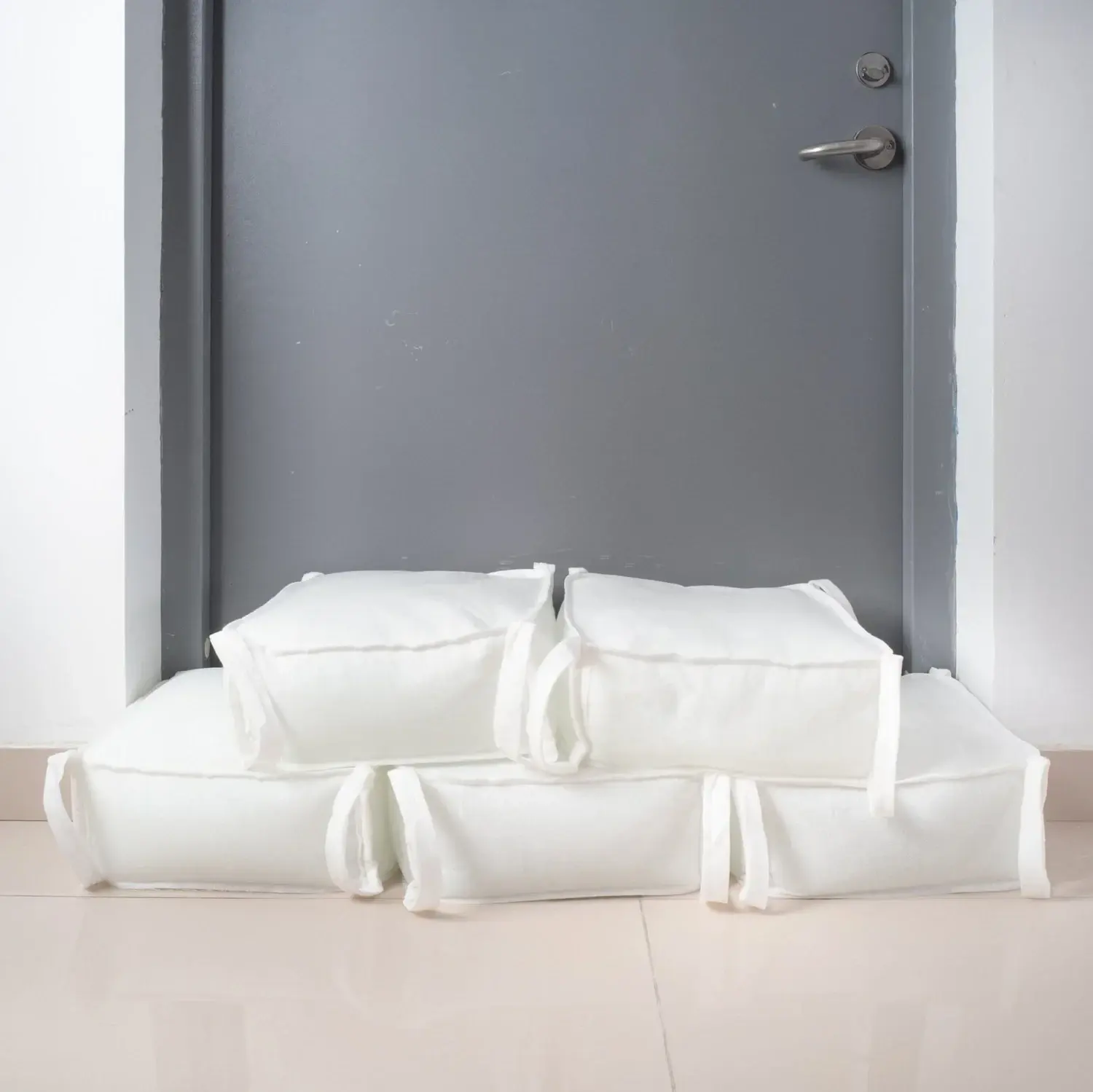
A water-activated flood barrier, often called a sandless sandbag or sandbag alternative, is a flat fabric bag filled with a super-absorbent material. In storage, it weighs only a pound or two and lies flat. When it comes into contact with water, the material inside absorbs the water and turns to gel, and the bag swells to full size within minutes.
Once activated, the bag behaves much like a sandbag. It is heavy enough to stay in place and can be lined up or stacked to block or redirect water. The difference is that the weight comes from the water itself, so there is no sand to haul or shovel before the storm.
One example is the Minnow water-activated, gel-filled flood bag available at EmergencyKits.com. For a deeper look at how these bags work at doorways, see "Door and Garage Flood Barriers: How to Choose the Right Protection for Every Opening."
Sandbags vs. Water-Activated Bags: Comparison Table
Here is how the two options compare on the points that matter most to homeowners.
| Traditional sandbags | Water-activated bags | |
|---|---|---|
| Storage weight | Empty bags are light, but filled bags weigh about 35 to 40 pounds each and take up significant space | Lightweight and flat until activated, so several fit on a garage shelf |
| Setup time | Slow; bags must be filled, carried, and stacked | Fast; bags are placed and then activated with water, swelling in minutes |
| Labor | Physically demanding, often a two-person job | Light; one person can usually deploy them |
| Shelf life | Empty bags store well if kept dry; filled bags and burlap can degrade with moisture and sunlight | Typically several years when stored sealed and dry; check the manufacturer's guidance; can be reused |
| Disposal | Sand exposed to floodwater may be contaminated; check local rules for disposal | Used bags are usually disposed of as household waste; check the product's instructions and local rules |
| Salt water use | Works in salt water | Many bags do not activate properly in salt water; you may be able to activate with fresh water first, but check the manufacturer's guidance |
In short, sandbags are inexpensive and work in any water, but they demand time and muscle. Water-activated bags trade a higher cost per bag for speed, easy storage, and a much lighter workload.
When Sand-Filled Barriers Still Make Sense
Water-activated bags are a strong fit for doorways and garages, but sand still has an important role. Sand-filled barriers are often the better choice for:
- Large berms and levees. Long runs of barrier across a yard, along a property line, or around a building need serious mass to hold back moving water.
- Salt water and brackish flooding. Sand works the same in any water.
- Long-term placement. A sand barrier can stay in place through an extended flood season.
For these jobs, large-format sand-filled barriers can replace hundreds of individual sandbags. One example is the Beluga sandbag flood barrier system, available through EmergencyKits.com. Each Beluga is heavy-duty and oversized, and it sells as one bag or a five-chamber bag. It ships flat, is positioned on site, and is filled with sand or another aggregate to form a levee-style wall. Each bag is 15 feet long, 3 feet deep, and 40 inches high, and it replaces roughly 750 standard sandbags while using about half the sand.
How to Use Flood Bags at Doors, Garages, and Driveways
Placement matters as much as the barrier itself. A few general guidelines apply everywhere:
- Place bags on a clean, dry surface so they sit flat.
- Butt the ends tightly together and overlap where possible, with no gaps.
- Stack in a pyramid shape if you need more height, with more bags on the bottom row.
- Activate bags before water arrives, so they reach full size and weight in time.
Doors
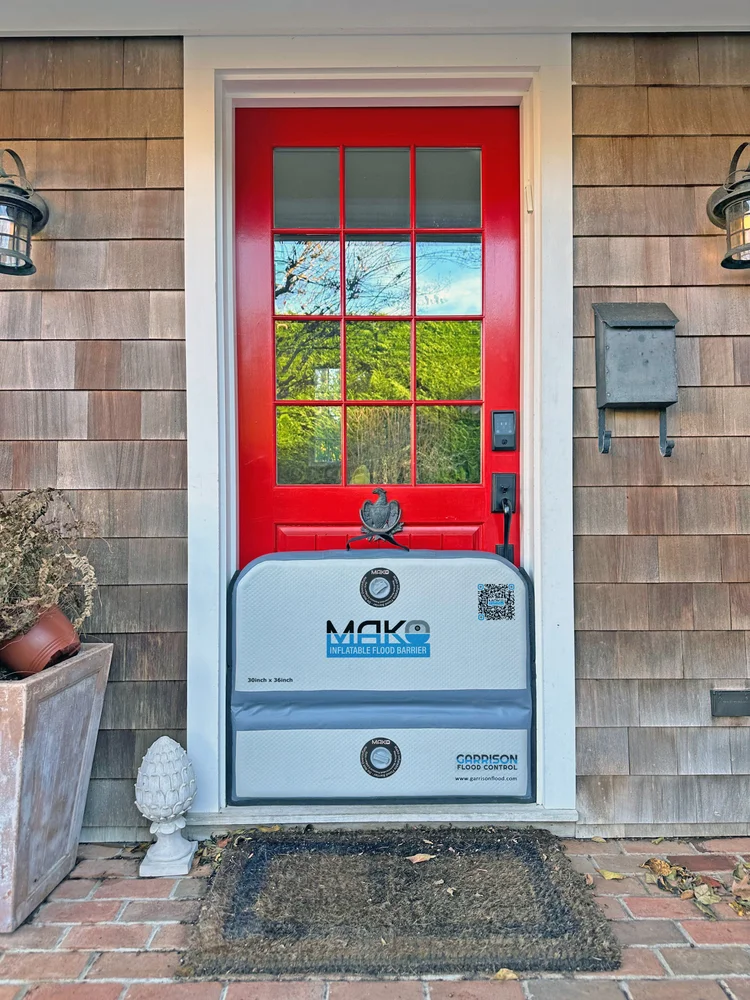
Line water-activated bags across the outside of the threshold, extending a few inches past each side of the frame. For extra protection, add a second row just inside the door.
For a single doorway, a barrier sized to the opening can create a tighter seal than bags alone. The Mako inflatable flood barrier, available at EmergencyKits.com, is one example. Learn more in "Door and Garage Flood Barriers: How to Choose the Right Protection for Every Opening."
Garages
Garage openings are wide, and the bottom seal rarely sits perfectly flat on concrete. Lay bags or tubes across the full width, pressed against the closed door, and wrap the ends a few inches up each side.
Water-filled tubes are a common choice for garage thresholds because their weight keeps them in place across a long, flat span. Guppy water-filled flood tubes, available through EmergencyKits.com, are one example. They come in 6-, 12-, and 24-inch diameters and in 10-, 25-, 50-, and 100-foot lengths, so you can choose the size that fits your space and protection needs. A seaming strip connects tubes end to end to create a longer, continuous barrier. For larger-scale protection, Guppy MAX heavy-duty water-filled flood barrier tubes measure 40 inches in diameter and 30 feet long.
Driveways and Property Perimeters
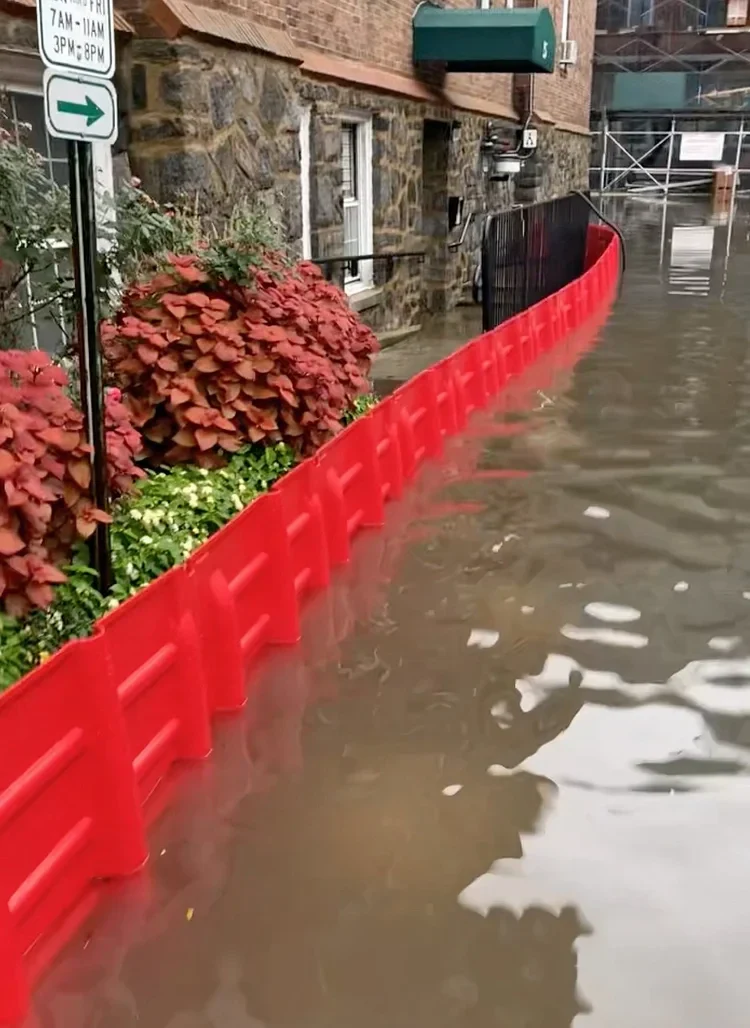
Driveways often channel water directly toward a garage. A barrier placed at the top or bottom of the slope can redirect water before it reaches the house. Longer runs like these usually call for connectable perimeter barriers rather than individual bags.
Modular and inflatable perimeter barriers are designed for this kind of coverage. The Mayim modular flood barrier panels and Mayim MAX modular flood barriers use interlocking panels to build a continuous flood wall, and the Serpent inflatable flood tube is an air-filled barrier whose sections connect for longer runs. All are available through EmergencyKits.com.
Coastal and Salt Water Flooding: Activate Bags With Fresh Water First
The super-absorbent material inside many water-activated bags absorbs far less salt water than fresh water. If a bag first meets storm surge or tidal flooding, it may not swell to full size or weight, which leaves gaps in the barrier.
If you live near the coast or a brackish waterway, follow these steps:
- Pre-activate with fresh water. Soak each bag in a tub or bucket of fresh water, or use a garden hose, before placing it.
- Give bags time to expand. Wait until each bag reaches full size before setting it in position.
- Place and stack as usual. Fully activated bags hold their shape once salt water arrives.
- Check the product's instructions. Some products are rated for salt water and some are not. Make sure you do your research.
For homes that regularly face storm surge, a sand-filled or water-filled barrier may be a better primary defense, with water-activated bags as a second layer at doors.
After the Flood: Removing Standing Water
Even a well-built barrier can leave water behind it. Rain falls inside the protected area, small amounts seep through seams, and groundwater can rise from below. Removing that water quickly helps limit damage to floors, walls, and stored belongings.
Common options include:
- Pumps. A portable sump or utility pump moves larger volumes of water out of a garage or basement.
- Wet/dry vacuums. These work well for shallow puddles on hard floors.
- Absorbent products. Absorbent pads, socks, and sponges soak up water in corners and along barrier lines where pumps can't reach.
One example of a flood water pump is the Sea Sponge, designed to collect water that pools behind a perimeter barrier. It is available through EmergencyKits.com.
Once the water is gone, dry the area thoroughly with fans and dehumidifiers. Inspect barriers for damage before storing them for the next season.
Choosing Between Sandbags and Water-Activated Barriers
For most homeowners protecting doors and garages, a water-activated flood barrier is the more practical choice. The bags are easy to store, quick to deploy, and manageable for one person. Sand-filled barriers still make sense for large berms, long-term placement, and areas that face regular salt water flooding.
Many homes benefit from a mix: water-activated bags or a fitted barrier at each opening, and a larger perimeter or sand-filled barrier where water gathers. EmergencyKits.com carries options across each of these categories.
Shop Minnow Water-Activated Bags
Shop Mako Inflatable Flood Barriers
Request a Quote
FAQs
Are water-activated sandbags reusable?
It depends on the product. Many water-activated bags are designed for one use, though some can be dried out and reused if the fabric is intact. Check the manufacturer's instructions before planning to reuse them. If you want a barrier you can use season after season, a reusable option such as an inflatable or water-filled barrier may be a better fit. The Minnow water-activated flood bag is reusable and when the bags reach the end of their life, they require no special disposal and can be thrown away with regular trash.
Are water-activated sandbags reusable?
Unused water-activated bags typically last several years when kept sealed, dry, and out of direct sunlight. Shelf life varies by product, so check the label and replace bags that show signs of moisture or damage.
How do you use sandbags in a flood?
Fill each bag about halfway, fold the top under, and lay bags lengthwise in the direction of the water flow. Stack them in staggered rows, like bricks, pressing each bag firmly into place to close gaps. For walls taller than one or two rows, build a pyramid shape with a wider base. Place sandbags before water arrives, and check local emergency guidance for recommended placement. For a lighter alternative at doors and garages, see "Door and Garage Flood Barriers: How to Choose the Right Protection for Every Opening."